
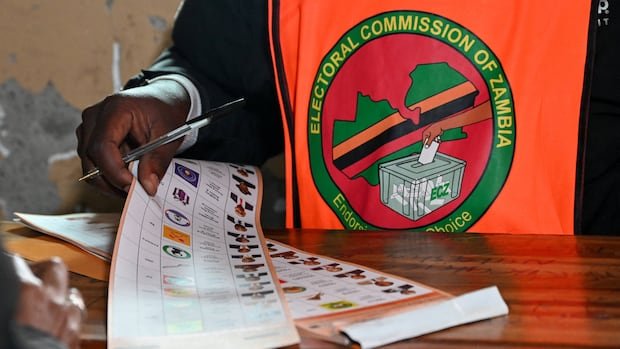

Zambia’s President Hakainde Hichilema secured a second consecutive 5-year term in office, facing a strong challenge from the opposition leader amidst public dissatisfaction with ongoing economic hardships despite signs of improvement. The election commission revealed that Hichilema garnered around 60% of the valid votes, while his main rival, Brian Mundubile, received approximately 38%.
The commission chairperson, Mwangala Zaloumis, officially declared Hichilema as the president-elect of Zambia on August 18, 2026. This marked Hichilema’s seventh attempt at the presidency, with his victory widely anticipated given his incumbency advantage, whereas Mundubile was contesting for the first time.
Throughout his campaign, the 64-year-old Hichilema emphasized his economic achievements since assuming office amid the pandemic-induced debt crisis in 2021. Zambia, known for its copper resources, has been a focal point of competition between global powers like China and the United States due to its strategic minerals.
Following a relatively calm lead-up to the August 13 election, tensions escalated rapidly post-voting. International observers, including the European Union, acknowledged the peaceful conduct of the election but highlighted restrictions on fundamental freedoms during the broader electoral process.
Incidents of unrest emerged, with authorities arresting 11 individuals, including prominent opposition figures, in an operation marked by gunfire exchange during Mundubile’s presence. The electoral commission temporarily halted vote-counting due to reported violence against polling staff and ballot paper theft, prompting allegations of result tampering from Mundubile’s camp, which Hichilema’s supporters refuted.
The Zambia Conference of Catholic Bishops expressed apprehension over the army’s involvement in the vote counting, emphasizing the constitutional role of the Zambia Police Service in maintaining order during elections. Despite potential legal challenges from the opposition, analysts suggest the likelihood of successful overturning of the results is low.
While localized political tensions may persist in the aftermath, widespread unrest is not anticipated in the coming days, according to Greg Musiker, a Zambia analyst at advisory firm Signal Risk.