
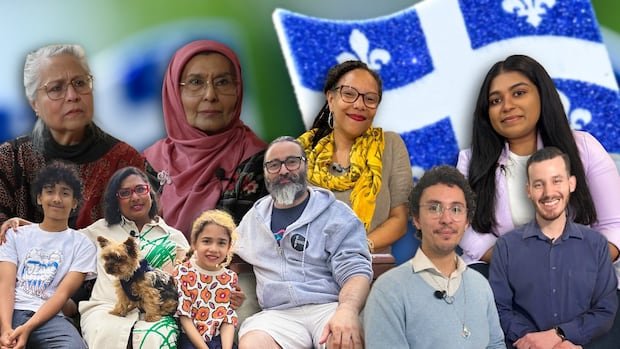

In the political sphere of this region, the discussion often centers on Quebec’s identity, known as “l’identité Québécoise” in French. The concept is open to interpretation and varies among individuals. Prior to the upcoming provincial election on Oct. 5, a diverse group of Quebec residents shared their unique perspectives on this topic.
Among those I engaged with were two women who migrated from India and Pakistan to Quebec in the 1970s during René Lévesque’s era. I also spoke with young advocates of Quebec sovereignty with Indigenous and Maghrebi heritage backgrounds. Additionally, I met a Montrealer who distinguishes herself from being labeled as a Quebecer and two others balancing their Quebecois pride while upholding English-language institutions.
Krishnavi Sivanesan, a 25-year-old Montreal native, devotes her weekends to teaching Tamil to younger individuals who often converse in French during classes. Growing up in Montreal, she appreciates Quebec’s efforts to preserve the French language, having experienced challenges as a Tamil in war-torn Sri Lanka.
Dolores Chew and Shaheen Ashraf, residents of Quebec for over five decades, continue to cherish their South Asian roots, enjoying traditions like chai. Reflecting on their experiences during René Lévesque’s tenure and one of them voting ‘Yes’ in the 1980 referendum, their sense of belonging evolved over time.
Nabil Ben Ali Ouriaghli and Benjamin Gingras, members of Oui Quebec advocating for sovereignty, envision an inclusive independent Quebec that unites people. While they emphasize the importance of spreading their message, they acknowledge the ongoing work required.
Shereen Joseph, a Malaysian transplant to Montreal, found a sense of belonging in the city rather than in Quebec or Canada. Her integration into the Plateau-Mont-Royal borough allowed her to embrace her Malaysian heritage and the French language, while viewing language tensions in the province from a distinct perspective.
Susan Perera and Allison Saunders, English school board commissioners, not only promote English-language education but also contribute to fostering a bilingual Quebec community. Despite proudly embracing their Quebec identity, Saunders sometimes feels she does not align with certain conventional definitions of being a Quebecer.