
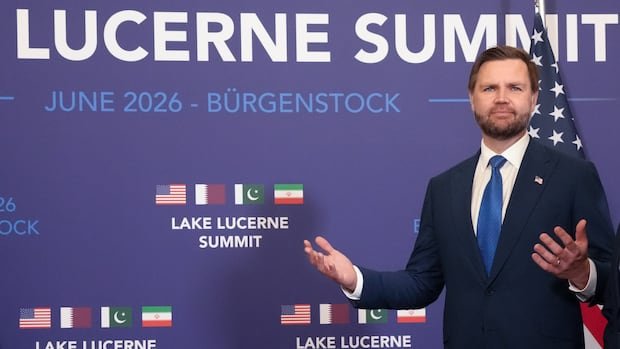

U.S. Vice-President JD Vance expressed optimism on Sunday about the potential for improved relations with Iran as both sides engaged in discussions to expand the temporary agreement reached last week to resolve the conflict in Iran. While Vance encouraged Tehran to seize the opportunity, U.S. President Donald Trump issued warnings of potential strikes against Iran for its backing of Hezbollah militants in Lebanon and any actions to disrupt the vital Strait of Hormuz.
During the talks held at a Swiss mountainside resort near Lake Lucerne, Vance and U.S. negotiators met with Iran’s parliamentary Speaker, Mohammad Bagher Ghalibaf, and Foreign Minister Abbas Araghchi. Mediators from Pakistan and Qatar also participated in the direct engagement, including separate private discussions between U.S. and Iranian teams with Pakistani and Qatari officials.
The primary focus for the U.S. is to engage Iran in negotiations concerning its nuclear program amid concerns over potential military use, a claim Iran denies. Vance is emphasizing the importance of Iran committing to keeping the Strait of Hormuz open, a critical passageway for about one-fifth of the world’s oil trade.
Despite Trump’s provocative statements from a distance, the negotiations continued with the Iranian delegation showing commitment, even after a reported “difficult phase” due to offensive messages from the U.S. President. While tensions persisted, talks centered on addressing the conflict between Israel and Lebanon, a key factor influencing the negotiation process.
The signed framework now requires intense efforts from top U.S. and Iranian negotiators to finalize technical details within a 60-day period, crucial for global economic and security implications. Recent escalations in Lebanon and claims of the closure of the Strait of Hormuz by Iran added complexity to the situation, although a ceasefire in Lebanon appeared to be holding.
The agreement allows Iran to resume oil sales and access frozen assets, with provisions for the reduction of highly enriched uranium stockpiles. However, Iran maintains its stance on uranium enrichment rights, as reiterated by Iranian officials. Amidst escalating rhetoric, both sides are navigating through the challenges of reaching a comprehensive deal while addressing regional conflicts.
Vance, along with special envoy Steve Witkoff and Jared Kushner, are leading the negotiations, with a focus on intricate technical aspects. The evolving dynamics of the talks have drawn scrutiny, especially as the vice-president contemplates a potential presidential bid in 2028.
The agreement’s terms, including temporary passage rights through the Strait of Hormuz and potential toll fees in the future, underscore the complex nature of the negotiations. The Trump administration aims to stabilize oil markets affected by the conflict, amidst concerns of rising gas prices. With Israel and Hezbollah not directly involved in the agreement, regional dynamics further complicate the path to a lasting resolution.