
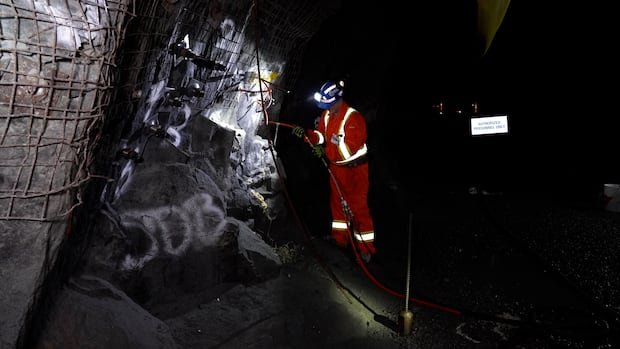

Ontario’s mining sector is projected to face a shortage of 5,000 workers by 2030 due to increasing demand, as stated by the Ontario Mining Association. The association’s president, Priya Tandon, highlighted the urgent need for additional workforce, emphasizing that this issue is a top priority in discussions with government and industry representatives.
The provincial government reports that Ontario currently has “35 significant mineral projects” in progress that could potentially reach production in the coming decade. Tandon identified an aging workforce and a lack of awareness about career opportunities in mining as key factors contributing to the labor shortage. Notably, 21% of mining employees in Ontario are over the age of 55.
To address the growing demand for skilled workers in the mining industry, the federal government has introduced the Mining and Minerals Workforce Alliance. This initiative aims to develop industry-driven solutions to enhance the skilled workforce required for mineral production. Additionally, the province announced funding for Science North to establish a training center in Sudbury, which will cater to 7,000 individuals annually across various sectors, including mining and construction.
Tandon emphasized the need for a diverse range of professionals in the mining industry, such as mining engineers, geologists, and skilled tradespeople like millwrights and heavy equipment mechanics. She noted that competition for skilled workers is intense within Ontario and across industries like energy, construction, and manufacturing.
Some mining companies have taken proactive steps to invest in employee training programs. For instance, Agnico Eagle offers a comprehensive three-month training program at its Macassa Mine, ensuring job placement for program graduates. Northern College has also revamped its mining engineering technician program based on feedback from industry partners, aiming to better align with industry needs.
Sudbury MPP Jamie West highlighted the importance of educating young individuals about career opportunities in mining to address the labor shortage effectively. He emphasized the need for early exposure to mining careers to attract a diverse pool of talent to the industry. Despite the challenges ahead, Tandon remains optimistic about meeting the demand for 5,000 mining roles by leveraging ongoing initiatives and industry collaborations.