
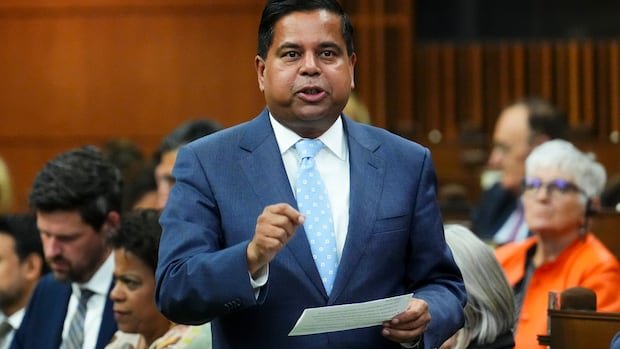

Public Safety Minister Gary Anandasangaree has expressed a willingness to consider reducing the duration for which electronic service providers must retain digital metadata under a proposed bill aimed at aiding law enforcement and intelligence agencies.
Recently, Anandasangaree had firmly opposed altering a provision in the legislation that could mandate service providers to store metadata – information about a communication, excluding the actual content – for up to one year. Critics argue that this provision could lead to the collection of private data on ordinary Canadians unrelated to any criminal activity.
University of Ottawa law professor Michael Geist raised concerns at the House of Commons public safety committee, stating that the stored metadata, including location details, could create a comprehensive surveillance map of nearly all Canadians.
Following discussions with stakeholders, Anandasangaree mentioned in an interview that the government is now more receptive to reducing the maximum retention period of one year. Proposed amendments to the bill are anticipated to be presented at the public safety committee, where a detailed review of the legislation is underway.
The Liberals defend the bill, asserting that it will equip law enforcement with necessary tools to combat modern crime within the boundaries of the Charter of Rights and Freedoms. Conversely, opponents argue that the bill expands police and intelligence powers unnecessarily, impacting privacy rights, contravening the Charter, and potentially affecting Canada’s business attractiveness.
One aspect of the bill would empower authorities to request telecommunications providers like Bell or Rogers to disclose if they serve a specific individual or entity of interest, aiming to expedite investigations. Another part would mandate electronic service providers to establish and maintain technical capabilities facilitating access to communications and data for law enforcement and the Canadian Security Intelligence Service during their investigations.