
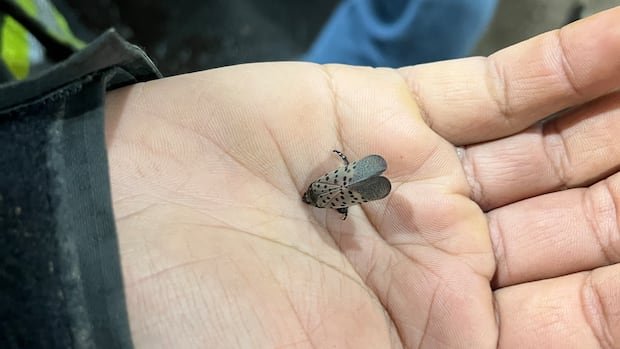

A recent detection of spotted lanternflies in St. Catharines, Ontario, has reignited concerns about the invasive insect making its way into Canada from the United States. Although there are no confirmed breeding populations of spotted lanternflies in Canada, experts warn that these insects can severely damage vineyards, fruit trees, and hardwoods by feeding on plant sap, particularly grapevines.
In a recent incident, Aidan Dagg, a resident of Ontario and an inspector at a local nursery, discovered a deceased spotted lanternfly and shared the finding on iNaturalist, a platform for identifying flora and fauna. This marked Dagg’s first encounter with the insect after years of vigilance.
According to Diana Mooij from the Canadian Food Inspection Agency (CFIA), spotted lanternflies have a wide range of host plants and pose a significant threat to the grape and wine industries. Following Dagg’s report, CFIA inspectors promptly responded, collecting 12 deceased adult spotted lanternflies from a batch of imported planting pots originating from Pennsylvania.
Research scientist Amanda Roe explained that these insects often travel through shipments and can hitch rides on vehicles, potentially spreading across borders. Despite their limited flying capabilities, spotted lanternflies are adept hitchhikers, clinging onto various surfaces and vehicles, including those returning from the U.S.
The invasive spotted lanternfly was first identified in the U.S. in 2014, leading to infestations in 19 states. Uncontrolled populations of these insects can have severe economic repercussions. A study by Penn State’s College of Agricultural Sciences estimated significant economic losses in Pennsylvania due to the spread of spotted lanternflies.
Experts emphasize the need for vigilance against spotted lanternflies and recommend immediate reporting if sighted. These insects can survive in various temperatures, posing a challenge for containment efforts. Vigilance and proactive reporting remain crucial in preventing the spread of this destructive pest.