
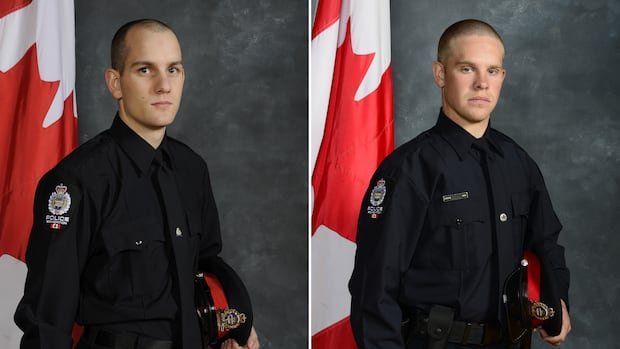

In a courtroom argument on Thursday, a defense lawyer contended that a man facing manslaughter charges for selling a gun to a teenager who fatally shot two Edmonton police officers is being unfairly targeted as a convenient scapegoat. The defense lawyer, Jamil Sawani, made this assertion during the closing arguments presented to Court of King’s Bench Justice John Little in the trial of 21-year-old Dennis Okeymow.
The tragic incident occurred in March 2023 when Const. Travis Jordan and Const. Brett Ryan lost their lives while responding to a domestic violence call. The shooter, Roman Shewchuk, had previously assaulted his mother before the fatal encounter with the officers. Following the attack on the police, Shewchuk turned the gun on himself.
Okeymow pleaded not guilty to three counts of manslaughter related to the officers’ deaths but admitted guilt to charges of trafficking weapons and drugs. The court is set to deliver a verdict at a later date.
The Crown argued that Okeymow should be held accountable for the gun violence as he had sold the firearm to the teenager, along with cannabis and cocaine. Despite the defense’s claim that Okeymow was unaware of the extent of Shewchuk’s mental health issues, the prosecution maintained that selling a gun to a minor demonstrated criminal responsibility.
Evidence presented in court revealed extensive communication between Shewchuk and Okeymow, primarily centered on drug-related matters. Okeymow sold a .22-calibre semi-automatic rifle and ammunition to Shewchuk, who had initially sought a handgun. The Crown emphasized that the sale price of the gun was significantly inflated compared to its legal market value.
The prosecution argued that Okeymow should have recognized the potential harm in selling the firearm and should be held liable for the foreseeable risks. The defense contested these claims, suggesting that the tragedy was solely the result of Shewchuk’s actions and mental state, not directly influenced by the gun sale.
The defense further criticized the Crown’s attempt to establish a new form of criminal liability through this case, cautioning against extending such legal interpretations without proper legislative backing. Okeymow, an Indigenous individual, was 18 years old during the events in question.
In summary, the trial raises complex legal questions about accountability in cases of gun violence, with the judge tasked to determine the extent of Okeymow’s culpability in the tragic deaths of the officers and the teen.