
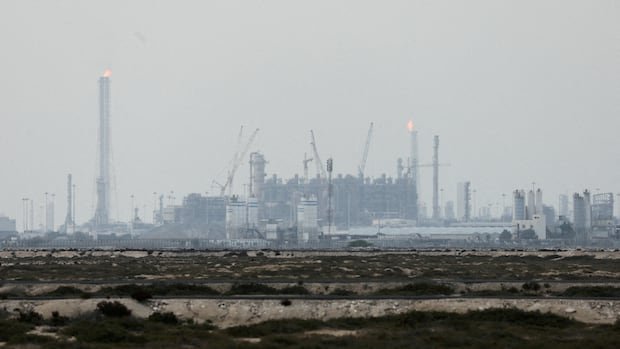

An escalation in conflict unfolded in the Middle East as Israel conducted airstrikes on the South Pars natural gas field in the Persian Gulf, a critical energy source for Iran. Following the attack, U.S. President Donald Trump stated that Israel would refrain from further strikes on the gas field. However, he cautioned that any continued Iranian attacks on Qatar’s energy infrastructure could provoke massive retaliation from the U.S., threatening to devastate the entire field.
These strikes on oil and gas installations, coupled with the closure of the Strait of Hormuz, have significantly disrupted global energy supply chains, leading to a surge in energy prices. The impact of these events has reverberated across international markets, with oil prices soaring and gas prices in Europe witnessing an uptick amid concerns of potential Iranian retaliatory actions on Gulf energy facilities.
The assault on the South Pars natural gas field, a shared resource between Iran and Qatar, has raised alarm as it serves as Iran’s primary domestic energy source, supplying around 80% of the country’s natural gas needs. This attack holds strategic importance given Iran’s reliance on South Pars for energy security, particularly in electricity production where the nation faces periodic challenges. Iran is a major global consumer of natural gas, ranking fourth behind the U.S., China, and Russia, despite having a smaller economy.
In response to the conflict, Qatar’s Ras Laffan facility, a key hub for liquefied natural gas exports, suffered substantial damage in the attacks. The disruptions have impacted Qatar’s LNG export capacity, threatening supply chains to Europe and Asia and resulting in an estimated $20 billion loss in annual revenue. The facility’s operations were halted, affecting a significant portion of LNG production for the foreseeable future.
Additionally, the SAMREF refinery in Saudi Arabia, jointly owned by Aramco and Exxon, was targeted by a drone strike. The extent of the damage is still being evaluated. Concurrently, Saudi air defenses intercepted a ballistic missile aimed at the Red Sea port city of Yanbu, where the refinery is situated. SAMREF plays a crucial role in Saudi Arabia’s crude oil export operations, processing over 400,000 barrels of Arabian Light crude oil daily.
The attacks on energy facilities in the Middle East have drawn condemnation from regional and international entities, with concerns escalating over the destabilizing impact on global energy markets. Amidst these developments, Kuwait’s Mina al-Ahmadi and Mina Abdullah refineries were targeted by drones, resulting in fires at both sites. Kuwait had already reduced oil output as a precaution. In Israel, an Iranian missile struck oil refineries in Haifa, causing minor disruptions but no significant damage, according to Israeli authorities.
As tensions continue to escalate in the region, the repercussions of these attacks on energy infrastructure are anticipated to have far-reaching consequences on global energy security and market stability.