
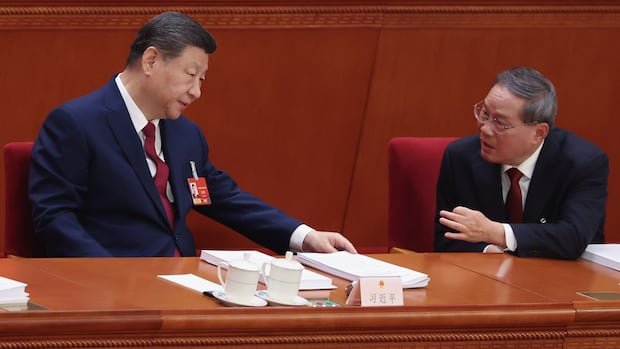

China’s most recent economic growth plan was mostly finalized before the outbreak of a significant war in the Middle East initiated by the U.S. and Israel. However, during the opening speech of the “Two Sessions” by Chinese Premier Li Qiang in Beijing, some adjustments to the plan were apparent. While highlighting the importance of domestic resilience in the world’s second-largest economy and acknowledging ongoing trade tensions with the United States, Li also mentioned that the external economic environment had become more intricate.
The reference to complexity could be attributed to the recent developments in Iran, a key ally and oil supplier to China, where the leadership has been targeted and the country is facing intense military attacks.
China had been supporting Iran economically and politically for several years before the conflict. Despite the risks of Western sanctions, China continued to purchase Iranian oil and provided essential components for Iran’s missile and drone programs. Additionally, a long-term economic cooperation agreement was signed between China and Iran in 2021.
Following the commencement of the conflict, Chinese officials condemned the actions in Iran, sent a special envoy to ease tensions, but refrained from significant involvement in the conflict. China, being a major importer of Iranian oil, has not shown intentions of actively interfering in the conflict.
The latest economic strategy of China focuses on achieving around five percent annual GDP growth, emphasizing resilience, self-reliance, and dominance in emerging sectors like robotics, renewables, and artificial intelligence. This plan is designed to withstand potential economic shocks from the ongoing crisis and present China as a stable and reliable trade partner.
China has strategically built up oil reserves to mitigate price spikes and can rely on Russia to offset disruptions in oil supply from the Middle East. The country’s economic preparations have been long-standing, aiming to ensure stability and less uncertainty for future development plans.
Unlike Western nations, China adopts a centralized approach to economic growth, setting targets during the Two Sessions meetings and leveraging its vast population and resources to achieve them. While the recent five-year plan did not directly address the Middle East conflict, it prioritizes security concerns closer to home, particularly the Taiwan Strait.
China remains focused on enhancing economic relations with the U.S., its largest trading partner, despite the ongoing conflict in the Middle East. The stability of the U.S. market is crucial for China’s exports, and the country relies on American components for advanced technologies like artificial intelligence.
Chinese President Xi Jinping aims to capitalize on Trump’s unpredictability to strengthen diplomatic and economic ties with the U.S. and other countries. China’s efforts to offer predictability in trade relationships have attracted visits from global leaders seeking to diversify away from U.S. markets.
In preparation for Trump’s visit, China has reduced military activity around Taiwan, signaling a temporary shift in its approach while maintaining territorial claims. This move aligns with China’s narrative of being a cautious and responsible global actor amid geopolitical challenges.