
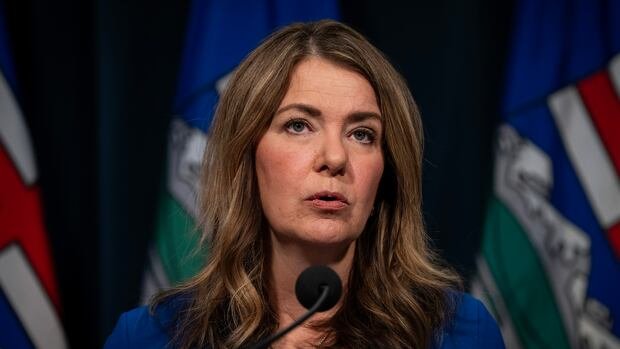

Alberta’s government is urging the federal government to amend the Constitution to grant provinces more authority in the appointment of federal superior court judges at the provincial level. Premier Danielle Smith and her counterparts from Ontario, Saskatchewan, and Quebec penned a letter to Prime Minister Mark Carney last week, expressing their desire for judges to only be appointed upon approval and recommendation by their respective governments.
Federal Justice Minister Sean Fraser promptly dismissed this request, prompting Alberta’s government to escalate its efforts. Smith and Justice Minister Mickey Amery announced on Monday plans to introduce a motion in the Alberta Legislature later in the week, advocating for constitutional changes to implement their proposal. They are hopeful that other provinces, Parliament, and the Senate will follow suit.
Quebec had previously passed a similar motion almost a year ago, and Alberta intends to mirror their approach. Amery explained that the government resorted to this formal call for a constitutional amendment due to the lack of progress through diplomatic channels.
The current Constitution grants Ottawa the sole authority for appointing provincial superior and appeal court judges. Amending this would necessitate approval in the House of Commons, the Senate, and by at least seven provinces representing more than half of the total provincial population.
Critics argue that the premiers’ proposed judicial appointment process could politicize the courts. However, Smith emphasizes the importance of provincial involvement in shaping the delivery of justice, stating, “It’s time for Alberta to have a real voice in selecting the judges who serve Albertans.”
Smith reiterated on Monday that Canada differs from countries like the U.S. and Australia, where state-level judges are appointed by their respective governments. Addressing this disparity, she believes, will enhance public trust in the justice system and empower provinces in shaping justice delivery.
Bianca Kratt, President of the Canadian Bar Association, pointed out in a letter to Carney that comparisons to other countries like the U.S. may not be relevant, as each country operates within its constitutional framework. In Canada, provincial judges have the authority to overturn federal laws, unlike state-level judges in the U.S.
Opposition NDP critic Irfan Sabir criticized Smith’s credibility in advocating for judicial reform, citing past instances where she questioned judicial independence. Sabir expressed skepticism about the government’s commitment to strengthening the judiciary.
Earlier this year, Smith had written to Carney requesting judicial reform and hinted at withholding court funding if the federal government ignored the plea. While the funding threat remains an option, normal funding has been maintained for the new fiscal year.
The initial proposal, which suggested the formation of a new committee to assess potential judicial candidates in Alberta, was swiftly rejected by Fraser. Smith had proposed a committee comprising an equal number of provincial and federal representatives. Currently, the existing seven-member committee overseeing judicial appointments in Alberta includes representatives from the provincial government, federal government, chief justice, law society, and the Canadian Bar Association’s Alberta chapter, mirroring similar structures in other provinces and territories.