
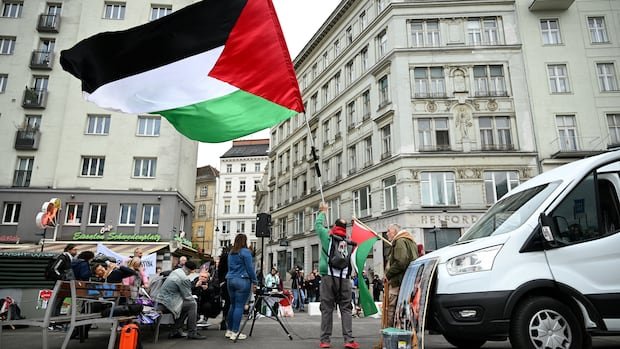

In the recent semifinals of the Eurovision Song Contest held in Vienna, Israeli artist Noam Bettan took the stage, marking a pivotal moment in the competition’s history. Singing his emotive ballad “Michelle” predominantly in French, the 28-year-old singer faced a mixed response from the audience, with both cheers and jeers echoing in the arena. The occurrence of certain audience members being escorted out for disruptive behavior, including shouting “Stop the genocide,” further highlighted the controversial atmosphere surrounding Israel’s participation in the event.
The theme of this year’s Eurovision, “united by music,” clashed with the discord surrounding Israel’s involvement and its actions in the Gaza conflict. Notably, Spain, Ireland, Slovenia, the Netherlands, and Iceland opted to boycott the competition. Despite attempts to remove Israel from the event, the European broadcasters ultimately upheld its participation, setting the stage for ongoing debates regarding the country’s future involvement, especially if Bettan emerges victorious and Israel’s KAN network secures the hosting rights for the next Eurovision.
While Eurovision has historically prioritized music over geopolitics, this year’s edition has been marked by underlying tensions. The competition, known for its flamboyant performances and patriotic fervor, has stood as a resilient beacon of European pop culture, attracting a massive global audience. However, the geopolitical friction surrounding Israel’s participation has cast a shadow over the event, with significant opposition and controversies arising.
The ongoing conflict in Gaza, where Israel’s military response has drawn condemnation and accusations of genocide, has fueled the anti-Israel sentiment at Eurovision. The decision of several countries to boycott the event reflects the broader geopolitical context shaping the competition, turning it into a platform for ideological battles. Additionally, concerns have been raised about voting irregularities and alleged attempts by Israel to influence the voting process in its favor, sparking further controversies.
As the Eurovision finale approaches, the spotlight remains on the unfolding drama surrounding Israel’s participation and the broader implications for the future of the iconic music competition. The evolving dynamics at play underscore the intersection of music, politics, and global conflicts in the contemporary Eurovision landscape, setting the stage for a potentially transformative event on Saturday night.