
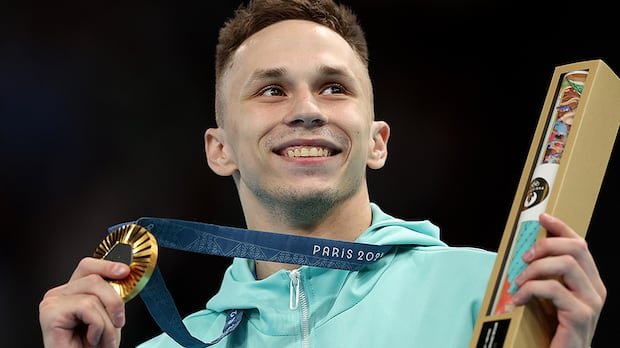

In a notable development on Thursday, the International Olympic Committee (IOC) announced that athletes from Belarus should be allowed to compete under their national identity without being required to seek neutral status, even amid the ongoing conflict in Ukraine. This guidance, while not binding, indicates a potential shift in policy that could lead to the normalization of Russia’s participation in future Olympic Games, including the upcoming 2028 Los Angeles Summer Games.
Previously, athletes from Russia and Belarus had to compete as neutrals in individual events at the 2024 Paris Olympics and the recent Milan Cortina Winter Olympics due to their countries’ involvement in the conflict. However, the IOC emphasized that athletes should not be penalized for actions by their governments, including participation in wars or conflicts.
Looking ahead to the 2028 Olympics, where over 200 national teams will compete in more than 350 medal events, the qualification process is set to begin this summer. This updated stance by the IOC follows calls from critics urging sanctions against Israel due to the conflict in Gaza, which the IOC has resisted under the leadership of President Kirsty Coventry and former President Thomas Bach.
Despite this shift, Russian athletes still face obstacles in their full reinstatement, as the IOC awaits the results of a World Anti-Doping Agency investigation into recent reports implicating a Russian anti-doping agency official. The IOC’s Executive Board expressed concern over the ongoing investigation, which has kept the Russian Olympic Committee suspended since October 2023 for incorporating regional sports bodies in illegally occupied territories.
In response to the IOC’s decision, various sports organizations have taken firm stances against Russia and Belarus since 2022. Track and field’s World Athletics, for instance, has barred athletes and officials from these countries from participating in international events, a move unaffected by the IOC’s recent announcement.
At the 2024 Paris Olympics, 32 neutral athletes, including Ivan Litvinovich of Belarus, won five medals, while 20 neutral athletes at the Milan Cortina Olympics secured one silver medal. Looking back at previous Olympic Games, Russia and Belarus sent sizeable teams to Tokyo in 2021 and Beijing in 2022, and Belarus can now expect to participate fully in the 2028 Olympics under its national flag.
The IOC’s decision coincided with news of a doping case involving Belarusian weightlifter Yauheni Tsikhantsou, who tested positive for growth hormone. While his case is being processed by the International Testing Agency, Tsikhantsou, a bronze medalist in the men’s 102-kilogram class in Paris, remains unsuspended.
On a different note, the IOC board, led by Coventry, provided updates on the 2030 Winter Games and the selection of a host for the 2030 Youth Olympic Games. An ongoing review of the Winter Games program will be finalized in June, with a focus on traditional snow and ice sports. The selection of a host city for the Youth Olympics has been delayed due to uncertainties surrounding the IOC’s strategic goals and global perspectives.
The potential host cities for the 2030 Youth Olympic Games include Asuncion, Paraguay; Bangkok, Thailand; and Santiago, Chile, with a final decision pending.