
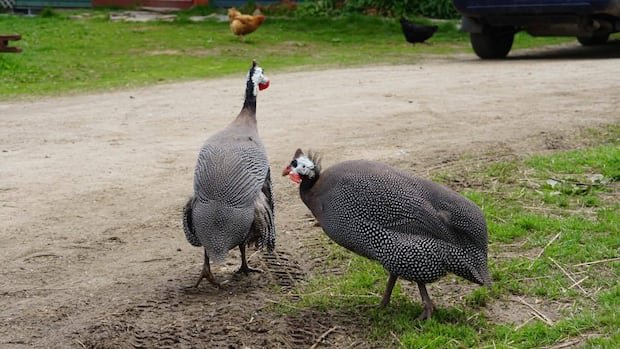

As tick populations continue to spread in Canada, more residents in Nova Scotia are seeking ways to safeguard their yards by enlisting the help of guinea fowl, a loud and unique bird species known for their insect-eating habits.
Heather Squires, a guinea fowl breeder near Lunenburg, N.S., has seen a surge in interest in these birds, with a doubling in inquiries this year. Due to high demand, she has temporarily stopped selling the birds to ensure an adequate supply for tick control on her farm, where tick sightings are rare.
The rise in guinea fowl popularity has attracted new breeders like Phalen MacLean from New Glasgow, who noticed a decrease in tick numbers as her flock of 13 guinea fowl grew. Last year, Nova Scotia was identified as having the highest tick population in Canada, with a corresponding increase in tick-borne diseases like anaplasmosis.
While using guinea fowl for tick control is not a new concept, Bruce Rathgeber, a professor at Dalhousie University, mentioned that their effectiveness in curbing tick populations is still debatable. He believes they can act as a supplementary measure alongside other methods like landscape management.
Guinea fowl are challenging to breed in captivity due to their loud nature and tendency to nest in risky places. Breeders recommend training them to return home at night and emphasize the birds’ preference for picking bugs off leaves without damaging plants. Adequate space for free-ranging and precautions against road hazards are essential considerations for those considering owning guinea fowl.
In conclusion, while guinea fowl show promise as natural tick controllers, experts suggest combining their presence with other tick control strategies for optimal results.