

A convergence of two national holidays, a major global sports event, and millions of people is coinciding with scorching temperatures across a broad region in North America. A high-pressure system settling over several cities, including southern Ontario and parts of Quebec, is expected to push temperatures into the mid-30s and low 40s. This heatwave poses challenges for a crucial World Cup match amid concerns that the oppressive heat will persist. Following a deadly heatwave in Europe that claimed over 1,000 lives in a matter of days, health experts are cautioning about risks despite better access to air conditioning in North America.
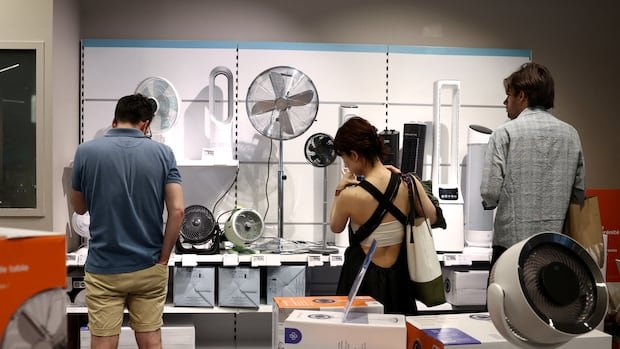
To combat the heat dome, experts recommend seeking refuge in air-conditioned spaces. For those without access to air conditioning, utilizing fans can offer relief, especially up to temperatures around 38 degrees Celsius. Research indicates that fans can help lower body temperature slightly and reduce the heart’s workload, particularly beneficial for older adults and individuals with heart conditions.
However, using fans in excessively hot indoor conditions can be counterproductive, creating a “convection oven” effect, especially for older individuals. Placing fans directly towards the body can enhance heat exchange, facilitating the dissipation of heat from the body to the environment.
Another cooling strategy for those lacking air conditioning is dampening the skin with water. This method, akin to artificial sweating, aids in evaporative cooling. Additionally, wetting the skin does not deplete the body’s water resources, offering a cost-effective cooling solution.
Staying hydrated with electrolyte-rich fluids is crucial during extreme heat, as certain beverages like alcohol can exacerbate dehydration. Moreover, heat can impact mood, mental health, and the body’s response to medications, underscoring the need for vigilance, especially among children, older adults, and individuals with psychiatric conditions.
As global warming intensifies, nighttime temperatures are becoming a growing concern during heatwaves. Continuous high temperatures from day to night can escalate bodily stress. It is essential to plan for cooler environments, ideally below 26 degrees Celsius, to mitigate severe health risks. Experts emphasize the importance of proactive planning, mutual support, and vigilance for signs of heat-related stress, such as dizziness, lightheadedness, and nausea.