
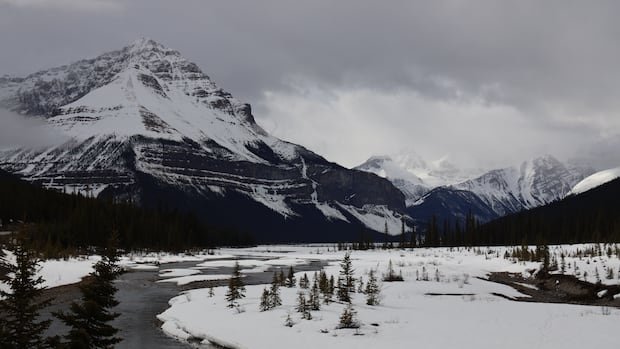

A colder and wetter winter in the Canadian Rockies has led to near-record snowfall, potentially benefiting the Northwest Territories in reducing drought and wildfire risks this summer. The amount of snowmelt will play a crucial role in determining the impact.
Regions in the northern Rockies, which are vital water sources for the Northwest Territories, have experienced higher-than-average snowfall this year. Despite this, parts of the Northwest Territories faced dry to severe drought conditions at the end of March, with precipitation levels well below normal.
Recent wildfires in the Northwest Territories have been exacerbated by low snow and rain, resulting in insufficient soil moisture and dried-out vegetation, fueling fires in the summer and fall. Kate Hale from the University of British Columbia’s geography department expressed cautious optimism regarding the drought and wildfire outlook in the Northwest Territories due to the increased snowpack at higher elevations.
Snowpack estimates in early March indicated levels 110 to 150 percent above normal in the headwater regions of the Mackenzie River Basin. However, areas like Yellowknife and Great Slave Lake had snowpacks ranging from 70 to 90 percent of normal. The rate of snowmelt in the coming weeks will determine the likelihood of flooding, drought, and wildfires in the Northwest Territories.
If the snow melts at an average pace, the territory could see relief from wildfire risks this year. However, rapid melting due to high temperatures in May could lead to flooding and another challenging wildfire season. While a single year of above-average snowpack may not fully mitigate long-term aridity, it can make a difference by extending water resources availability.
Snowpack acts as a natural reservoir, releasing water downstream during the summer. The timing of snowmelt impacts water distribution across various “buckets” within the watershed, including streamflow and soil replenishment. Hydrophobic burned soils pose a risk of increased flooding due to water resistance.
John Pomeroy from the University of Saskatchewan highlighted the need for sustained wet conditions to replenish groundwater levels, citing the prolonged low water levels in Great Slave Lake. The above-average snowpack seen this year aligns with expected fluctuations driven by climate change, with La Niña potentially contributing to the increased snow levels.
Climate change signals are evident in the variability of temperature and precipitation patterns, with a trend of longer and more intense droughts alternating with severe wet periods. This cycle contributes to challenges like wildfires, crop failures, and flooding in the region.