
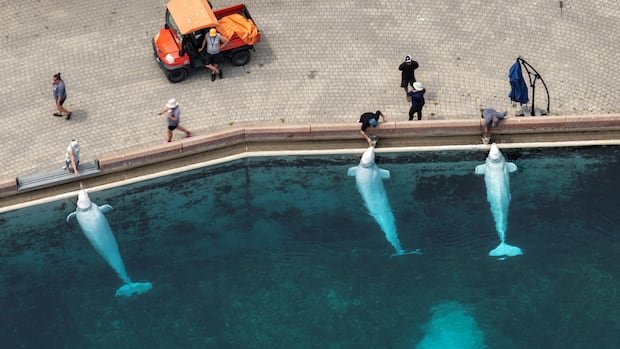

Earlier this month, a plan was approved by the federal government to relocate the 30 beluga whales from the now-closed Marineland in Niagara Falls, Ont., to new international facilities. Due to a 2019 law in Canada prohibiting the breeding or entertainment use of whales, dolphins, and porpoises, the belugas are anticipated to be distributed among an aquarium in Spain and four in the United States.
Transporting these aquatic animals, which can reach lengths of up to 4.5 meters and weigh up to 1,900 kilograms, presents a significant challenge. While specific details from the destination aquariums overseeing the rescue plan are still pending, insights from experts familiar with whale transport shed light on the process.
Step 1 involves obtaining necessary permits from the Canadian government and recipient countries to facilitate the move. Decisions on the destination for each beluga will be influenced by their individual personalities as assessed by veterinarians and through health checks before transport. Although Ottawa has granted initial approval, additional logistical steps and permits are required before the relocation can proceed.
Step 2 entails a period of practice to familiarize the belugas with the transportation tools. Trainers will employ custom-made slings and stretchers to lift the belugas from their tanks, with a focus on acclimating the animals to these devices over several months. The goal is to ensure that the belugas are comfortable with the equipment before travel day.
On the day of transport, the belugas will be carefully lifted from their tanks using slings and placed into custom transport crates. These crates must be spacious enough to allow the animals to move their heads and tails comfortably, while also providing a suitable water level for submersion. Padding inside the crate will help reduce external noise that could distress the belugas during transit.
Step 3 involves the actual journey, with the transport crate being moved by truck to a cargo plane. Trainers and veterinarians will accompany the belugas during the flight, monitoring their breathing and providing reassurance throughout the journey. Pilots may adjust the altitude of the plane to ensure the comfort and safety of the belugas during the flight.
Upon reaching their destinations, the belugas will undergo quarantine to confirm their health status and prevent the spread of diseases. Trainers will likely remain on-site to share their expertise on the belugas’ behaviors with the new caregivers. The decision not to release the belugas into the wild is based on concerns about their ability to survive independently, especially since many were born in captivity and lack the necessary skills to thrive in the wild.