
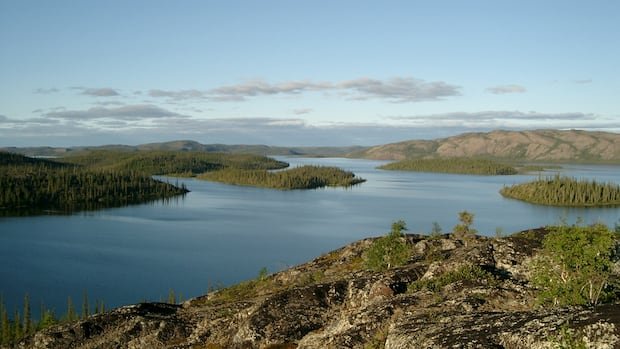

A recent study suggests that climate change has led to significant alterations in the algae population of Great Bear Lake in the Northwest Territories. Published in the Proceedings of the National Academy of Sciences (PNAS) journal, the research highlights the impact of increased ice-free days and rising air temperatures on the lake’s algal community.
According to John Smol, a biology professor at Queen’s University and co-director of the Paleoecological Environmental Assessment and Research Lab (PEARL), the changing algae composition may have winners and losers within the ecosystem. While the reduction in ice cover could potentially increase overall algae production, the shift in algae types raises uncertainties about its implications.
Previous studies in Great Slave Lake indicated a transition from high-calorie algae varieties to lower-calorie ones. This shift in algae species, similar to changes observed in the Great Lakes, could have significant repercussions on the food chain, particularly impacting fish populations.
The study team analyzed sediment core samples from various parts of Great Bear Lake to track environmental changes over time. Comparisons with research on Lake Hazen and Great Slave Lake revealed a notable shift in algae species towards those thriving in open water environments.
Researchers were surprised by the rapid changes observed across all three lakes, considering their substantial size. Despite the lack of observable trends in his 14 years as a fishing guide on Great Bear Lake, Reid Stoyberg acknowledges the need for further data collection to draw conclusive insights.
Stoyberg emphasized the necessity of continued research to monitor the effects of environmental changes on the lake’s ecosystems and species survival strategies. As Great Bear Lake presents a challenging environment, any alterations could potentially disrupt the delicate balance of its ecosystem, necessitating adaptive responses from its inhabitants.