
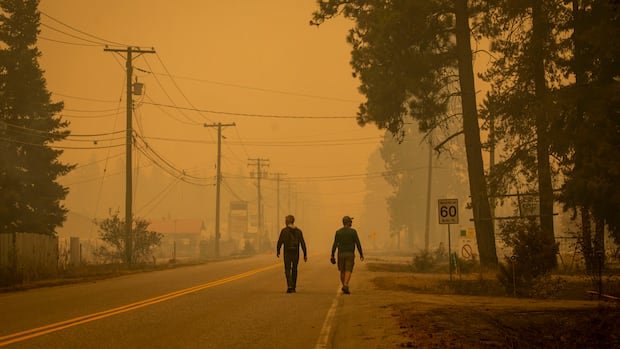

Health officials and advocates in rural British Columbia are expressing worries over gaps in monitoring air quality, stating that certain communities could face hazardous levels of wildfire smoke if they lack access to precise local data. This concern arises as the health effects of wildfire smoke become more evident and as new monitoring stations are being set up in various parts of the province to address these gaps.
Air quality monitoring is typically done by federal and provincial authorities. According to Environment Canada, the National Air Pollution Surveillance program comprises 286 sites spread across each province and territory. Despite the significant number of monitoring sites, Christopher Lam, the president and CEO of the B.C. Lung Foundation, highlights substantial gaps in coverage, particularly in rural and remote areas. He emphasizes that local pollution levels and associated health risks often go unnoticed due to this lack of monitoring.
Experts attribute the longer fire seasons and drier landscapes to climate change, leading to more intense and widespread forest fires. In response to the impact of wildfire smoke, some families in remote communities are already adjusting their daily routines.
For example, in Gold River, nine-year-old Roland Latimer, who suffers from asthma, checks the air quality daily before going outside. Roland’s family underscores the importance of having accurate and local air quality information, as poor air quality forces him to remain indoors, affecting his quality of life.
The B.C. Lung Foundation has installed several air quality monitors in Gold River to provide more accurate data for residents. This initiative follows the tragic death of Carter Vigh, a nine-year-old boy from 100 Mile House who passed away from an asthma attack during the severe wildfire season in July 2023. His parents have since been advocating for improved air quality monitoring in the province.
Furthermore, the impacts of wildfire smoke extend beyond deaths, with health officials pointing out that the number of fatalities represents only a fraction of the overall health consequences. Smoke from wildfires contains fine particulate matter that can penetrate deep into the lungs, causing inflammation and potentially affecting other organs.
Research conducted by Chris Carlsten at the Air Pollution Exposure Laboratory at the University of British Columbia suggests that wildfire smoke may pose greater health risks compared to other forms of pollution. Health officials recommend taking precautions such as limiting outdoor activities during smoky periods and enhancing indoor air quality to safeguard health, as indoor air quality plays a significant role in overall well-being.