
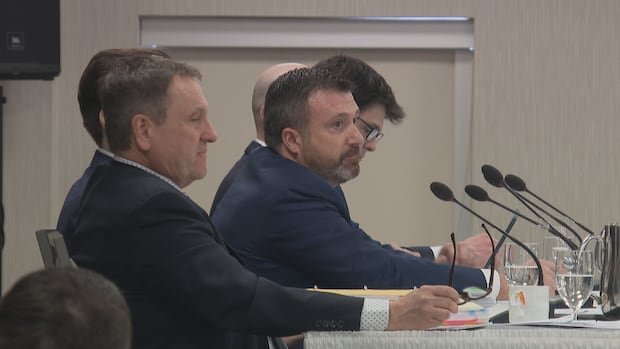

An executive at N.B. Power maintains the belief that a significant battery system would be more expensive than a contentious gas and diesel project, despite receiving a proposal indicating a substantially lower cost from energy storage developers NRStor. The proposal, sent to Energy Minister René Legacy and N.B. Power CEO Lori Clark on Dec. 9, outlined an eight-hour, 400-megawatt battery system that NRStor claimed would cost less than half of the estimated $3.5 billion for the gas and diesel plant. Coady, however, stated that the utility’s cost data from 2023 and 2024 was deemed the most accurate, and they did not perceive a notable cost advantage with batteries.
In response to NRStor’s proposal, Coady mentioned that he could not comment on the pricing as he had not seen the proposal. N.B. Power declined to disclose who reviewed the Dec. 9 proposal or how it was handled. The utility plans to evaluate it as part of its ongoing call for smaller 50-megawatt battery projects, which was initiated on Dec. 17 and closes by the end of the month.
Expressing concerns, Coady highlighted that N.B. Power apprehends that a large-scale battery system may not offer the same reliability as the gas and diesel project. With a projected need for an additional 400 megawatts of power by 2028 during extreme weather conditions or when other power sources are unavailable, N.B. Power is considering both battery and gas-fired turbine options to meet the capacity requirement, emphasizing the different operational durations each technology can provide.
During a cold snap in February 2023, N.B. Power faced challenges in recharging a potential battery system due to limited energy import options. The utility aims to ensure an extra 400 megawatts is accessible for up to 72 hours during severe winter events, surpassing previous requirements submitted to the Energy and Utilities Board. N.B. Power indicated that a 1,000-megawatt, four-hour battery system would be needed to match the effective load carrying capability of the gas and diesel plant, which they argued would be more cost-effective than a larger battery system.
NRStor’s proposed 400-megawatt, eight-hour system aligns closely with the utility’s capacity needs, storing up to 3,200 megawatt-hours of energy. NRStor’s executive, Jason Rioux, emphasized the reliability of battery systems during extended cold periods, suggesting ways to leverage existing assets like diesel generating stations for recharging batteries post-peak demand.
Regarding concerns over the integration of a large battery system into the network, Coady likened it to managing a substantial data center. However, Rioux explained that battery systems do not always require a full discharge and recharge cycle, citing the flexibility of the Oneida Energy Storage Project in Ontario as an example.
Taking a technology-agnostic approach, experts like Warren Mabee emphasized the importance of exploring various energy generation and storage options to mitigate risks associated with long-term costs. As utilities weigh their capacity needs, embracing technology neutrality allows for a comprehensive evaluation of solutions that best align with the region’s requirements.