
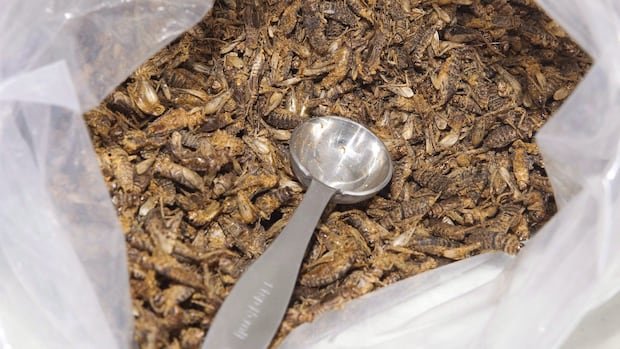

Insect farming was anticipated to experience significant growth, particularly exemplified by Aspire Food Group Canada in London, Ont. Marketed as the world’s largest cricket farm, this fully automated 150,000-square-foot facility was designed to accommodate billions of insects and generate millions of kilograms of protein annually. Crickets are lauded for being a sustainable protein source, requiring less land than traditional livestock and holding potential to combat global food insecurity.
The concept garnered international support, winning the prestigious $1-million US Hult Prize in 2013, under the auspices of former U.S. President Bill Clinton. Subsequently, it attracted investments from various countries, including the United States, Canada, Ireland, and South Korea, along with substantial federal loans and grants. Despite coming online in 2022, the facility faced financial challenges, leading to receivership in 2025, with the amount of public funds recovered remaining undisclosed due to a court order.
The collapse of this cricket farm, touted as the world’s largest, was not abrupt but rather a consequence of an overestimation by investors regarding market demand for edible insects. The reluctance of many North Americans to embrace insect consumption, termed the ‘yuck factor’ by experts, coupled with the relatively high cost of crickets, posed significant hurdles for the industry’s growth. While initial expectations were optimistic about rapid expansion, the North American market for insect consumption failed to develop as swiftly as anticipated, resulting in a conundrum for producers stuck between pricing and consumer acceptance challenges.
Darren Goldin, a seasoned insect farmer and the vice president of operations at Entomo Farms in Norwood, Ont., highlighted the ongoing struggle within the industry to balance prices and consumer appeal. Unlike Aspire’s model of using stacked plastic bins, Entomo Farms employs a more open and hands-on approach with “cricket condos” made of cardboard, facilitating better monitoring and care for the insects.
Goldin emphasized the intricacies and constant adjustments required in cricket farming, suggesting that an automated system may not offer the same level of responsiveness to changes in the environment or livestock conditions. Court documents revealed that Aspire’s operational difficulties stemmed from various factors, including environmental disparities between Texas and Ontario, ongoing design modifications, and equipment malfunctions that hindered performance.
As of June 2024, Aspire was operating at only half capacity, necessitating substantial additional financing to resolve production issues. Farm Credit Canada (FCC) was owed approximately $41 million at the time of receivership, with the actual recovery amount undisclosed to maintain confidentiality during legal proceedings. Agriculture and Agri-Food Canada (AAFC) also provided financial support to Aspire, with a significant portion of the funds still outstanding.
Ultimately, the sale of the property was completed, with proceeds paid to the designated law firm overseeing the asset liquidation process. The exact sale price remains confidential, leaving uncertainties about the extent of public funds lost in the venture. Despite being acquired by Halali Group Holdings in 2025, details regarding the transaction amount are still under wraps due to a court directive, underscoring the lingering ambiguity surrounding the financial aftermath of Aspire Food Group Canada’s closure.