
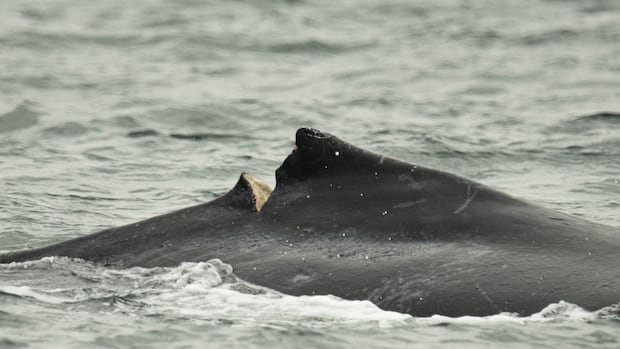

A Victoria-based company has developed cutting-edge technology capable of identifying marine mammals, currently undergoing testing on a new electric passenger ferry. Reach Technologies Inc., founded by Glenn Jones, has transitioned from aerospace to marine detection technology after 32 years. The company’s innovative multispectral camera, rotating 360 degrees, can swiftly recognize various objects, including marine life.
The Department of National Defence is commencing trials with Reach Technologies this month. At a cost of up to $600,000 per unit, the devices are designed to detect marine mammals as soon as they surface, a critical feature given recent incidents of humpback whale collisions with vessels in British Columbia.
CIRQL Ferries, planning to operate two electric ferries by 2028, aims to deploy this detection technology on routes where whale strikes have occurred. Marine experts emphasize the importance of early detection to reduce the risk of vessel strikes on humpback whales, whose population is on the rise but vulnerable to such accidents.
Experts stress that speed reduction alone is not sufficient to prevent collisions, advocating for restricted areas and advanced detection systems. With the imminent launch of electric ferries, operators are enhancing safety measures, including staff training, speed management, and whale sighting alerts.
While electric ferries reduce underwater noise pollution, concerns remain about collision risks with marine mammals. Experts urge operators to develop comprehensive mitigation plans with expert guidance to ensure the safety of marine life amidst increasing vessel traffic.