
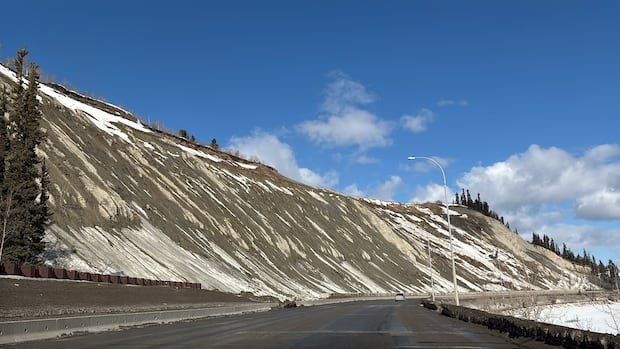

The City of Whitehorse is getting ready for the spring freshet season and the potential risk of landslides in the downtown area. Officials are comparing this year’s snowpack to 2022, a year when landslides caused closures on Robert Service Way and posed a threat to homes.
Robert Dickson, the City of Whitehorse’s engineering services manager, mentions that the risk zones stretch from Takhini to the south access road along Robert Service Way. He reassures residents that the airport operations are not likely to be significantly impacted by any major events.
With the melt rate progressing slowly, Dickson emphasizes the need for vigilance as warmer temperatures could lead to rapid debris movement along the escarpment, especially in exposed areas. The city has enhanced monitoring efforts by installing additional sensors and conducting more geotechnical inspections.
In terms of emergency response, Ursula Geisler, the city’s emergency manager, is working with property owners in high- and moderate-risk areas to prepare for potential hazards. Residents are advised to have a 72-hour emergency kit ready, similar to packing for a three-day camping trip, and to plan for alternative accommodation in case of evacuation.
Communication strategies include updates through local radio, social media, and the Yukon Government’s Alert Ready system, which can send emergency information directly to people’s phones. Geisler mentions that door-to-door notifications will also be utilized, and support for evacuated residents will be coordinated with partner agencies.
As the city addresses immediate threats, it is also exploring long-term solutions. In 2024, Whitehorse received $45 million from the federal government to stabilize the slopes. While no decisions have been finalized, one proposed solution involves reshaping the escarpment to enhance resilience and promote vegetative growth for soil stability. Additional safety measures near Robert Service Way, such as concrete slabs and road closure gates during high landslide risk times, have been implemented since 2022.