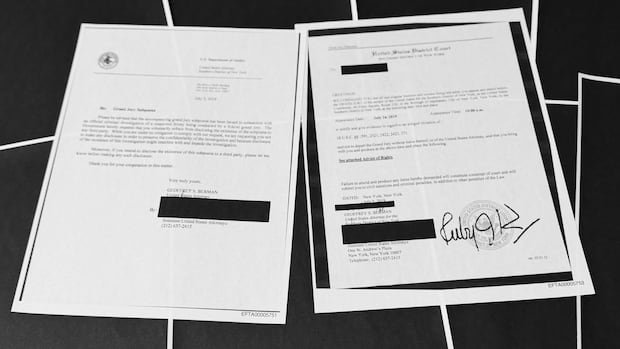

Since the commencement of the disclosure of documents related to Jeffrey Epstein by the U.S. government last Friday, there have been objections from Democratic lawmakers, Epstein’s victims, and their legal representatives regarding the extensive redactions present in the files. Numerous sections and entire pages within the thousands of documents are obscured from view. However, individuals on the internet have now managed to uncover some of the concealed information through innovative methods. Certain online investigators have resorted to sharing detailed instructions on social media platforms on how to unveil the redacted content.
One social media commentator, Ed Krassenstein, known for his criticisms of the Trump administration, shared a method for revealing redacted text. “You won’t believe how I unredacted these redactions,” he posted on social media platform X. Krassenstein’s approach involved a simple process of highlighting the obscured text, copying it, and pasting it into a separate document. He also raised the question of how many other files may not have been properly redacted.
According to Josh Quittner, CEO and co-founder of technology-focused website Decrypt, there is a flaw in some PDF documents that allows for the exposure of redacted content through a common “copy-paste” error. This digital security oversight has been observed in previous high-profile cases, enabling the retrieval of information with ease.
Another method to uncover redacted information entails taking screenshots of redacted scanned images and applying standard phone image-editing filters, as highlighted by Quittner. Users claim that by adjusting settings like exposure, brilliance, and contrast, they can decipher the hidden text. Despite these revelations, there have been no further details linking Epstein to U.S. President Donald Trump from the failed redactions, as reported by The New York Times.
Among the redactions that users have managed to penetrate is an exhibit in a civil case in the Virgin Islands involving Darren Indyke and Richard Kahn, executors of Epstein’s estate. The exhibit contains allegations regarding Epstein and his associates’ involvement in the facilitation of child sexual abuse.
While caution is advised regarding the unredacted information, as some claims may not be independently verified, Decrypt’s Quittner emphasized the importance of verifying the authenticity of such content. The issue of individuals interpreting the files without proper context or knowledge about the case has raised concerns since the initial document release.
In summary, the unredacted documents shed light on Epstein’s abusive practices and financial concealment techniques, offering insight into the disturbing nature of his actions. The ongoing scrutiny of the Epstein files underscores the need for responsible handling and verification of sensitive information to prevent the dissemination of potentially misleading or inaccurate details.