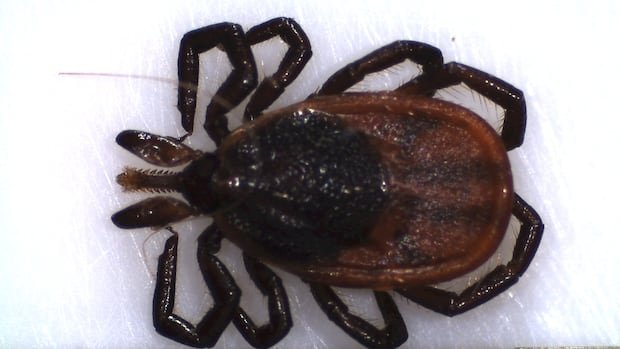

Nova Scotia’s snowy winter may not lead to a decrease in ticks this year, according to experts. Contrary to expectations, deep and long-lasting snow can actually benefit these resilient creatures by providing insulation. Laura Ferguson, an assistant professor at Acadia University, explained that the snow cover acts as a protective layer for ticks, allowing many to survive the winter. Despite some cold spells in December and January, the sustained low temperatures that could kill ticks came after the snow had already insulated them.
Ticks typically seek sheltered areas like under leaf litter during the winter, where they can survive without food for months. Ferguson noted that ticks can endure temperatures as low as 0 C to –5 C for weeks or months. However, consistent temperatures below –10 C without protective coverings could lead to tick mortality. Jantina Toxopeus, an associate professor at St. Francis Xavier University, highlighted that ticks freeze at temperatures below –15 C but can adapt better to gradual temperature changes.
Despite extreme cold spells in the past, including temperatures as low as –27 C, the tick population in Nova Scotia has not shown significant declines. Ferguson and Toxopeus both indicated that ticks are resilient to cold temperatures and can survive harsh winter conditions. Therefore, experts do not anticipate a significant change in tick populations compared to previous years.