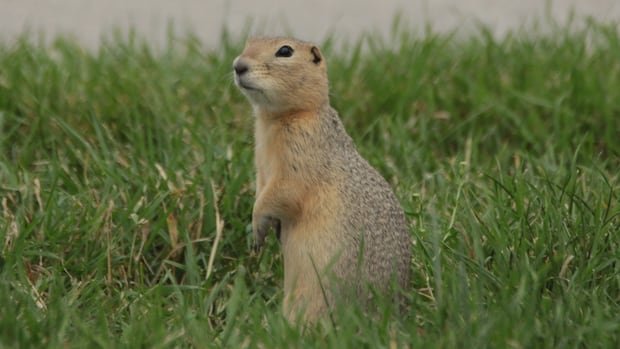

In the eyes of many, their round faces, inquisitive behavior, and playful antics are charming, but for farmers, they are troublesome pests. Gophers, also known as Richardson’s ground squirrels, cause significant financial losses to farmers by damaging crops and creating burrows that can harm machinery and put livestock at risk.
In 2024, the Pest Management Regulatory Agency prohibited the usage of strychnine to control gopher populations due to the risks it poses to other wildlife, including endangered species, through secondary poisoning and its perceived inhumane nature. To address this challenge, the Saskatchewan Wildlife Federation (SWF) initiated a complimentary gopher control program last year.
Todd Smith, the executive director of SWF, mentioned that the program was established in response to repeated requests for gopher control services. Farmers interested in availing themselves of this offer can reach out to the organization. The process involves collecting their contact details, which are then forwarded to the nearest branch within the province where designated volunteers are ready to assist.
Smith highlighted that the volunteer hunters ensure responsible and ethical practices and are covered by $5 million in liability insurance. While the program has received positive feedback, James Husband, the reeve of the Rural Municipality of Hazelwood, acknowledged that it only addresses a part of the larger issue as gophers reproduce rapidly.
According to Edmond Sanganyado, an associate professor at the University of Saskatchewan, shooting gophers is considered a more humane method compared to using poison. He emphasized that professional shooters can deliver a swift death to the animals, unlike the prolonged effects of strychnine poisoning.
Smith emphasized that the optimal time to target gophers is when adult males emerge from hibernation in mid-February to early March, followed by females in mid-March. Acting swiftly before the kits are born helps mitigate the potential impact on crops and farmers’ livelihoods. Some farmers, like Don Connick, have explored alternatives such as zinc phosphide in the absence of strychnine, although it is deemed less effective, more labor-intensive, and costly.