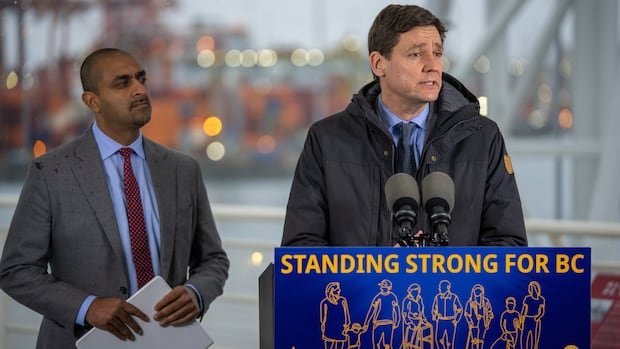

British Columbia Premier David Eby and Jobs Minister Ravi Kahlon are gearing up for a trade trip to India to boost local businesses and industries amid uncertain political times and strained international relations. Eby announced the upcoming delegation from January 12 to 17, emphasizing the importance of strengthening ties with India, poised to become the world’s third-largest economy soon.
The officials will engage with government and business leaders in key Indian cities such as New Delhi, Mumbai, Chandigarh, and Bengaluru. Kahlon highlighted that B.C. is a significant trade partner for India in Canada, with bilateral trade reaching $2.1 billion in 2024, accounting for a quarter of Canada’s exports to India.
Given the challenges posed by U.S. tariffs, the delegation’s primary focus will be on creating opportunities for the forestry sector, which has been impacted by tariffs. Additionally, they will advocate for the advancement of clean energy, mining, and technology sectors. Kahlon noted B.C.’s thriving tech industry, boasting 12,000 tech companies and the fastest-growing life sciences sector in the country.
Eby also mentioned the success of a recent trade mission to Asia, resulting in substantial projects like LNG Phase 2, which is nearing a final investment decision. This project, backed by a coalition of countries including Korea, Japan, and Malaysia, along with their state investment firms, could mark the largest private sector investment in Canadian history once finalized.
Addressing concerns about alleged Indian involvement in the murder of Canadian Sikh separatist Hardeep Singh Nijjar, Eby expressed profound worries over the incident and the accusation made by former Prime Minister Justin Trudeau. He emphasized the importance of the federal government collaborating with India on shared concerns, while B.C. focuses on supporting its residents by creating jobs in sectors affected by tariffs.
Eby also touched on U.S. President Trump’s actions in Venezuela and disagreed with Alberta Premier Danielle Smith’s call for a new pipeline through B.C.’s North. Instead, he advocated for increased investment in the Trans Mountain pipeline and suggested directing tax funds towards a refinery to support Canadians with locally produced oil and gas products.