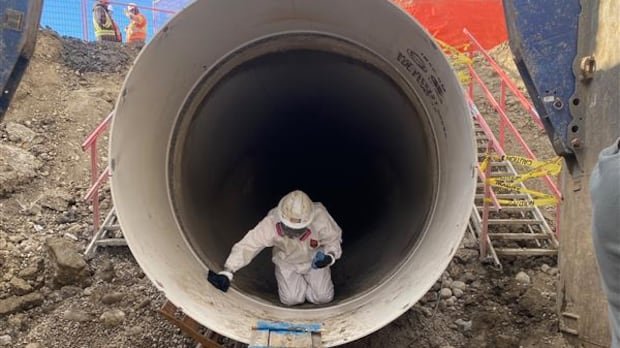

City council has approved the implementation of recommendations put forth in an independent panel’s assessment of the 2024 failure of Calgary’s primary water feeder main. Mayor Jeromy Farkas emphasized the need to prioritize these changes without financial constraints, leading to a unanimous council decision to proceed with the proposed actions. According to the released report, addressing longstanding issues in Calgary’s water infrastructure is crucial due to systemic challenges that have accumulated over several decades.
The report highlighted that concerns about the feeder main’s potential failure were initially raised in 2004 following a rupture of another main in northeast Calgary. However, the city consistently postponed inspections, monitoring, and risk mitigation measures for the feeder main over the subsequent twenty years. Despite recognizing the Bearspaw feeder main as a high-risk asset, limited perceived likelihood of failure resulted in resources being allocated elsewhere.
Key recommendations outlined in the panel’s review include expediting the twinning of the Bearspaw feeder main by early next year, maintaining and repairing the existing pipe, and establishing a dedicated water utility department overseen by independent experts. The urgency of these recommendations was stressed in the report due to the high vulnerability of the pipe to potential catastrophic failures in the future.
Mayor Farkas urged city council to fully adopt all the panel’s recommendations, emphasizing the need for comprehensive action rather than selective implementation. He underlined the necessity for not only replacing the line but also incorporating redundancy measures to strengthen Calgary’s water system and potentially reduce future operational costs.
The report acknowledged persistent problems with the Bearspaw main, noting missed inspection opportunities in 2017, 2020, and 2022. It attributed the recurring challenges in water infrastructure governance to a lack of expert support within city councils and management teams over the years.
In response to the report’s findings, the panel strongly recommended expediting the duplication of the steel pipe within a year, leveraging emergency procurement processes and private sector expertise. Additionally, it proposed establishing a dedicated water utility department led by a chief operating officer accountable for the city’s water network decisions.
The panel’s recommendations aim to address systemic gaps in Calgary’s water infrastructure, fostering a culture of accountability and proactive risk management. It is expected that most reforms can be implemented within a year, with a complete transition to a city-owned water corporation within three years.
During the council session, panel members highlighted the critical need for long-term planning and resiliency in Calgary’s water infrastructure, emphasizing the urgency of addressing delayed improvements. The recent catastrophic failures of the feeder main have underscored the imperative for swift action to strengthen the city’s water system.
The council engaged in thorough discussions with the panel, seeking additional insights on the history of infrastructure delays and guidance on implementing the report’s recommendations. The urgency of the situation was underscored by panel members, emphasizing the need to prioritize infrastructure sustainability over short-term growth considerations.
This report, distinct from a previous engineering analysis, sheds light on the pressing need to address deep-rooted challenges in Calgary’s water infrastructure to ensure a reliable and sustainable water supply for the city’s future.