
U.S. Secretary of State Marco Rubio indicated on Sunday that the United States would not assume a direct governance role in Venezuela on a day-to-day basis, apart from enforcing an existing “oil quarantine” on the country. This statement by Rubio during TV appearances aimed to alleviate concerns about potential long-term foreign intervention or failed nation-building efforts following President Donald Trump’s announcement the day before that the U.S. would oversee Venezuela post the removal of leader Nicolás Maduro.
Rubio’s remarks diverged from Trump’s ambiguous assertions that the U.S. would temporarily “run” the oil-rich nation, hinting at a governing structure where Washington would control Caracas. Nevertheless, Trump reiterated on Sunday evening that the U.S. was “in charge,” while interim Venezuelan leader Delcy Rodríguez expressed a newfound conciliatory approach by inviting the Republican president to cooperate.
Rubio provided a more nuanced perspective, emphasizing the continuation of the existing oil quarantine on sanctioned tankers before Maduro’s ouster and leveraging this control to advocate for policy changes in Venezuela. Rubio clarified that the U.S. would uphold the oil tanker blockade, which includes seized vessels, to pressure for beneficial changes in Venezuela’s oil industry and combat drug trafficking.
Rodríguez shifted her tone by advocating for “respectful relations” with the U.S. and proposing cooperation for mutual development within international legal frameworks. Following the U.S. operation, she urged the release of Maduro, asserting his legitimacy as Venezuela’s leader and condemning the armed intervention.
Trump’s repeated declaration of “running” Venezuela raised concerns among Democrats and segments of his Republican base opposed to foreign interventions, drawing comparisons to past nation-building endeavors in the Middle East. Rubio dismissed such apprehensions, emphasizing the distinct mission in the Western Hemisphere and suggesting a wait-and-see approach towards Maduro’s subordinates now leading Venezuela.
Trump hinted at potential future U.S. military actions in Colombia and Mexico, while expressing his belief that Cuba might undergo change without direct intervention. Maduro’s arrival in New York City, following his seizure in Venezuela, marked a significant development in the ongoing legal and diplomatic saga surrounding his government’s alleged involvement in narco-terrorism.
The U.S. government’s intensive pressure campaign on Maduro culminated in the operation to extract him and his wife, leading to legal debates regarding the operation’s legality without congressional approval. Maduro’s indictment on narco-terrorism charges in 2020, coupled with ongoing U.S. efforts to combat drug trafficking in the region, underscored the depth of American involvement in Venezuela.
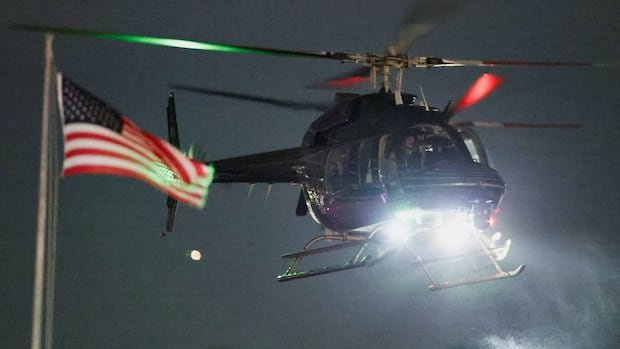
The operation’s stealthy execution on the anniversary of Panama’s leader’s seizure demonstrated meticulous planning by U.S. forces, aiming to ensure the successful extraction of Maduro. The aftermath in Caracas displayed an eerie tranquility, with the city relatively subdued and businesses closed, reflecting the impact of the recent political upheaval on Venezuelan society.