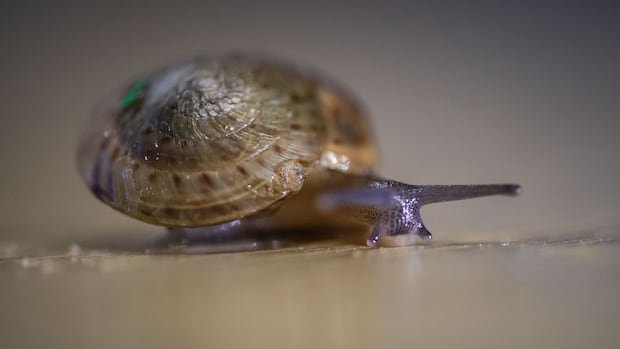

A decade ago, the last surviving greater Bermuda land snails were found in an alley in Hamilton, the capital city, where they had settled on concrete slabs near a dripping air conditioner. Now, these native creatures seem to be flourishing in the wild once more, thanks to conservationists who bred them in captivity and released over 10,000 snails into protected wooded areas in the archipelago over the past seven years.
Katie Kelton, an invertebrate keeper at Chester Zoo in the UK, expressed delight in the snails’ progress, noting confirmed breeding and increasing numbers as signs of the project’s success. The collaborative effort involving Chester Zoo, Biolinx Environmental Research in Canada, and the Bermudian government has been instrumental in rescuing the species from the brink of extinction. A study detailing the program’s achievements will be featured in the upcoming issue of Oryx, The International Journal of Conservation.
Despite these advancements, the snails still confront threats from habitat degradation and invasive predators, challenges that nearly led to their extinction. The tiny snails, scientifically known as P. bermudensis, are crucial to Bermuda’s ecosystems, serving as decomposers that recycle nutrients in the soil. Their intricate patterns and small size make them endearing, but their critical status as critically endangered, as classified by the International Union for Conservation of Nature (IUCN), demands ongoing protection efforts.
The successful re-introduction of the snails to the wild was celebrated during Reverse The Red Day by the IUCN, recognizing initiatives that combat biodiversity loss. Kelton, who worked closely with the endangered snails, emphasized the dedication required to ensure their survival, highlighting the team’s passion for invertebrate conservation.
While progress has been made in re-introducing the snails to various protected woodland sites, challenges persist in maintaining their long-term survival. Efforts to safeguard the snails involve administering birth control to invasive predators and educating the community on preventing the introduction of non-native species to their habitats. The continuous vigilance needed to protect these reintroduced colonies underscores the ongoing commitment required to preserve these beloved snails.