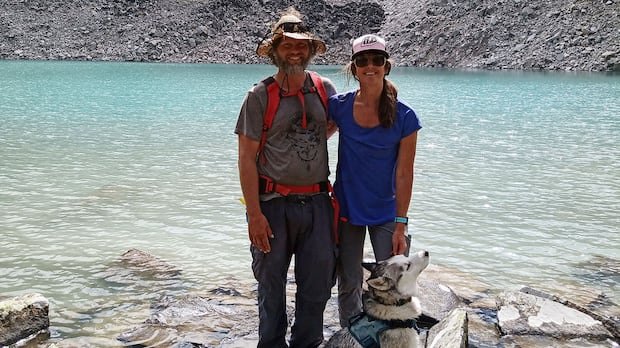

A pair residing in Radium Hot Springs, B.C., were shocked to discover the dangers of traplines on public Canadian land after their husky, Moon, tragically perished in a baited trap near their residence earlier this month. Sean Boxall expressed the traumatic incident should never happen to anyone. Boxall and Nicole Trigg are now advocating for increased awareness regarding the presence of traps in the backcountry of British Columbia and are urging the government to ban commercial traplines on public land, with exceptions for Indigenous harvesting and trapping rights.
The commercial trapping industry, overseen by the Wildlife Act, involves the killing of fur-bearing animals such as lynx, foxes, bobcats, wolves, and mink for their pelts, rather than for meat consumption. The B.C. Conservation Officer Service confirmed that the trap responsible for Moon’s death was legal and set by a licensed trapper. No offense had been committed, and no enforcement action would be pursued as the trapper had adhered to regulations, although a sign was not obligatory.
In response to the incident, the B.C. Trappers Association conveyed their condolences over the loss of the pet, emphasizing the necessity for enhanced public education on trapping practices to prevent similar tragedies. Conibear traps, like the one that claimed Moon’s life, employ a spring-loaded mechanism designed to swiftly capture and kill fur-bearing animals for their pelts.
Boxall recounted the distressing moments leading to Moon’s death, highlighting the indiscriminate nature of traps that can ensnare any animal attracted to the bait. Despite his efforts to rescue Moon, the Conibear trap proved challenging to open, resulting in an injury to Boxall’s hand that required stitches. The incident underscored the need for public education on trapping practices to ensure the safety of individuals exploring backcountry areas.
The Fur-Bearers organization, advocating for wildlife protection, opposes commercial trapping for fur in public spaces, citing concerns over inhumane trapping methods that can lead to unintended consequences. They call for mandatory warning signs for active commercial traps and increased setbacks from residential areas, trails, and roads.
The provincial government is encouraging public feedback on proposed regulation changes related to the International Humane Trapping Standards certified trap list until February 13, aiming to address concerns raised by incidents like Moon’s tragic death.