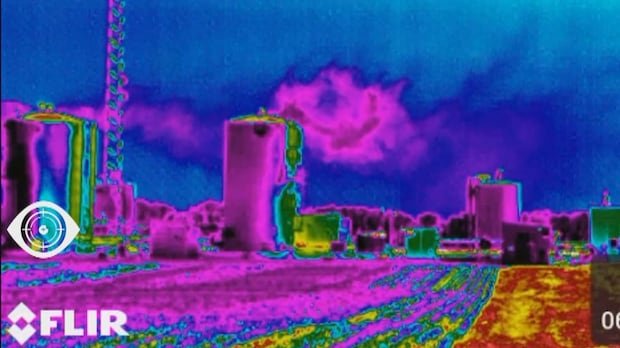

The federal government unveiled new rules on Tuesday to address methane emissions from the oil and gas sector, a significant contributor to climate change. This announcement coincided with the release of new footage highlighting the extent of the issue in Alberta, while Ottawa adopted a more lenient stance in the province.
The regulations, which were reportedly delayed for months, include substantial reductions in emissions but provide greater flexibility to oil and gas companies following complaints that the initial proposal was too stringent. Prime Minister Mark Carney’s administration has surprised some environmentalists by revising Canada’s climate policy and supporting a potential Pacific coast pipeline.
Environment Minister Julie Dabrusin introduced the new methane regulations, aimed at reducing emissions from major methane sources in Canada. While this marks the Carney government’s first major climate policy addition, sources suggest that the regulations were prepared nine months ago but delayed due to timing issues related to leadership changes and elections.
Additionally, the federal government granted Alberta an extension until 2035 to meet methane targets, through a memorandum of understanding signed in November. This decision has been met with mixed reactions, with some experts viewing it as progress in one aspect but a setback in another.
The regulations prohibit the release of methane through practices like venting and establish an inspection framework to detect and repair leaks. Operators have the option to develop their own strategies as long as they meet specified methane intensity thresholds equivalent to leading international standards.
Despite industry concerns about costs, the regulations are estimated to result in a reduction of 304 million tonnes of greenhouse gas emissions. The government predicts a minimal impact on oil and gas production growth but significant reductions in emissions.
Apart from its contribution to global warming, methane poses health risks due to its associated compounds found in natural gas. The regulations are expected to improve air quality, reduce health hazards, and prevent crop losses due to ozone damage.
Moreover, the regulations extend to landfills, requiring the monitoring and capture of methane emissions from organic waste. These measures are projected to reduce greenhouse gas emissions by 100 million tonnes between 2026 and 2040.
In light of expert analyses indicating a shortfall in meeting climate targets, concerns have been raised about the government’s decision to delay implementing the new methane regulations. Environmentalists have emphasized the importance of addressing methane pollution, as evidenced by recent surveys showing worsening emissions from oil and gas facilities in Alberta and Saskatchewan.