


According to an annual report from the UN on global climate efforts, it is now impossible to prevent a rise of 1.5 C above pre-industrial temperatures. A new strategy is required to cap peak warming and subsequently lower temperatures.
The UN’s newly suggested optimal scenario is to restrict global warming to between 1.7 and 1.8 C, and ultimately reduce temperatures to 1.5 C by the century’s end. Although this shift in messaging is concerning, it aligns with a report released by the UN earlier this summer, which indicated a potential overshoot of the 1.5 C limit.
The alternative plan emerges from the UN Environment Programme’s Emissions Gap Report, which analyzes the effects of nations’ climate strategies and forecasts their warming impact. These forecasts inform discussions at the annual UN climate conference scheduled for November, which will take place in Turkey this year.
Reports have indicated a gradual yet insufficient improvement in temperature forecasts since the Paris Agreement was signed in 2015. However, this year’s report incorporates the effects of the new U.S. administration under President Donald Trump.
“The U.S.A. has abandoned its net-zero emissions target,” stated Anne Olhoff, director of the UNEP Copenhagen Climate Centre, a research organization.
“As the second-largest emitter worldwide, this significantly influences global projections,” she added.

The UN just released another report saying global efforts are not enough to limit climate change to 1.5 C above pre-industrial averages. But even if we overshoot, aggressive emissions reductions could bring us back down.
Limiting ‘overshoot’
Average global temperatures have exceeded the 1.5 C threshold multiple times in recent years.
The year 2024 was confirmed as the hottest year on record, registering at 1.55 C above pre-industrial averages. Experts predict that 2027 will surpass this record, indicating that the 1.5 C threshold may be permanently exceeded.
-
We’ve had 12 months of record-breaking global heat. How close are we to passing the 1.5 C limit?
-
Guilbeault says it’s ‘deplorable’ Trump will pull out of Paris Agreement as California burns
“Now is not the time to give up; rather, we must focus on how to return to lower temperatures as swiftly as we can with minimal overshoot,” stated Inger Andersen, UNEP’s executive director.
The 1.5 C target is particularly vital for low-lying coastal and island nations, which face dire risks from rising sea levels. If warming surpasses 1.5 C, these regions might be forced to relocate significant parts of their populations or even their entire nations. These nations have strongly advocated for maintaining the 1.5 C target, emphasizing the need for the world to honor its commitments under the Paris Agreement.
“1.5 C must remain our guiding principle, and overshooting cannot serve as a justification for further inaction,” stated the Alliance of Small Island States in September.
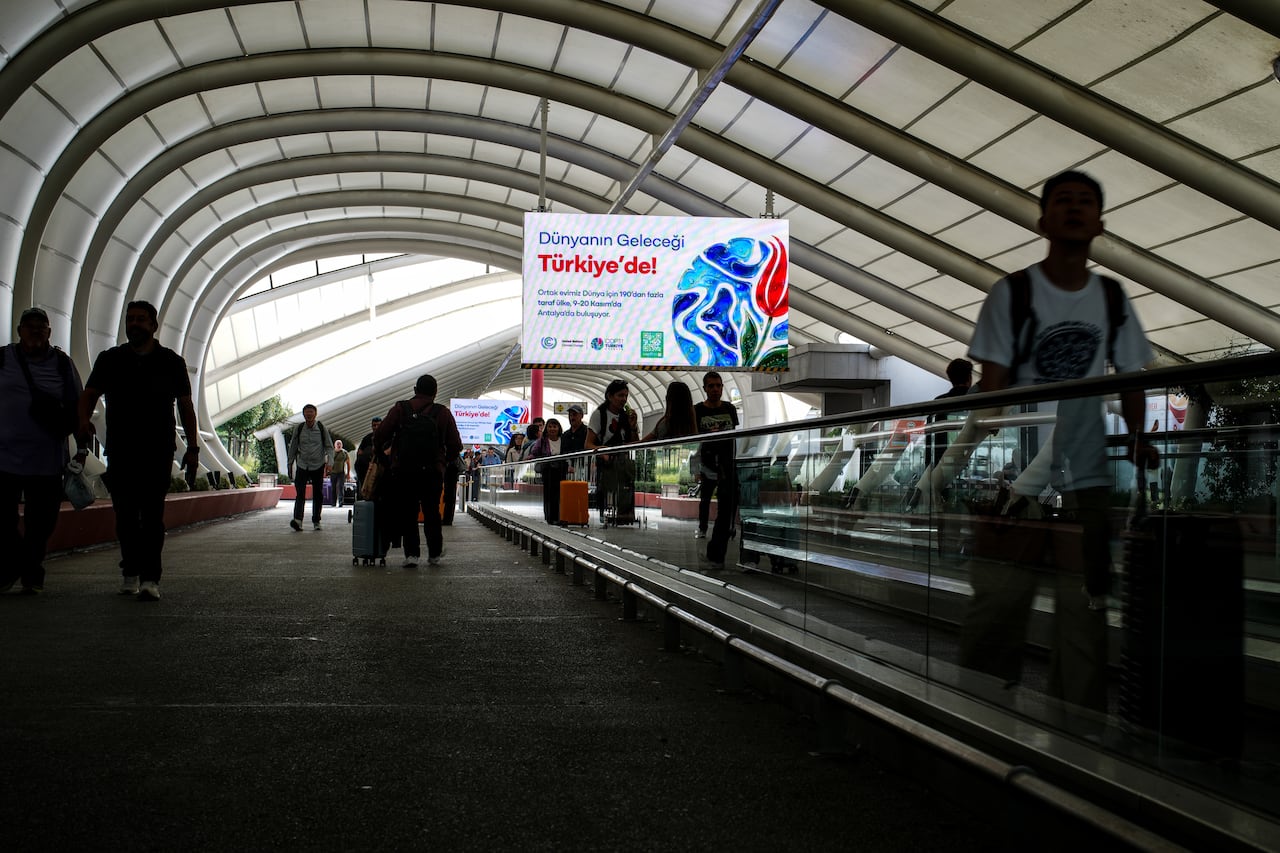
Passengers walk beneath a sign for the upcoming COP31 UN Climate Summit at the Istanbul Airport in Turkey. The UN’s latest pathway report guides negotiations at the summit. (Emrah Gurel/The Associated Press)
What’s the new pathway?
According to the UNEP report, a best-case scenario would see warming limited to between 1.7 and 1.8 C. To reach this target, global greenhouse gas emissions must be reduced by 18 percent by 2030, with further decreases of 45 percent by 2035 and 69 percent by 2040.
The alternative pathway necessitates that nations commit to more ambitious emissions targets than those currently established and fulfill their net-zero pledges.
There are encouraging signs, as renewable energy sources like solar and wind power are expanding rapidly, and the objectives for clean electricity could be achieved if the current trends persist.
“We observe that the growth in renewable electricity capacity has been three times greater than anticipated at the time the Paris Agreement was made, with solar capacity increasing sevenfold. This trend needs to continue,” Olhoff remarked.
Conversely, emissions from fossil fuel combustion have been moving in the opposite direction. The report indicates that oil’s share in global energy must decrease by 30 percent and gas by 35 percent by 2040 to adhere to the UN’s new pathway.

Dozens of countries are meeting in Colombia for the first summit focused entirely on the transition away from fossil fuels. Canada is sending a delegation to negotiate but is also the largest oil and gas producer who’ll be at the table.
Current plans not enough, UN says
Despite the significant challenges ahead, Andersen emphasized that this new pathway “is the sole means by which we can return to a manageable reality without severe consequences.”

A solar facility in Beijing, China. Solar capacity has increased seven times higher than expected, says Anne Olhoff, director of the UNEP Copenhagen Climate Centre. (Achmad Ibrahim/The Associated Press)
The report assessed various levels of climate actions, ranging from the least to the most optimistic: existing policies nations currently implement, their proposed climate strategies submitted to the UN, and all commitments made (including proposed strategies and additional net-zero pledges by governments).
According to the report, both current and proposed climate strategies fall short. If existing policies remain unchanged without improvements from countries, global warming could escalate to 2.8 C. Even in the best-case scenario, where nations adhere to all their commitments, warming would still reach 2.1 C.
The U.S. under Trump presents a significant hurdle. The U.S. withdrawal from the Paris Agreement and its retreat from climate initiatives could contribute an additional 0.1 C of warming.
“No nation will be spared from climate impacts, and we are already witnessing repercussions on every country globally, including the U.S.,” Andersen remarked.