
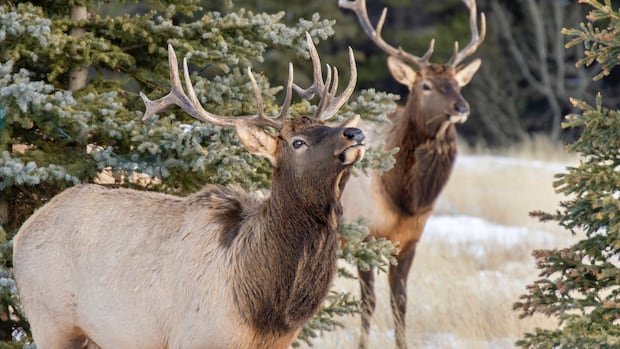

Amidst the vibrant orange larch trees, a loud cry reverberates through the Bow Valley. As the fall mating season is in full swing, male hoofed mammals throughout North America are vying for the chance to breed. This includes elk, a familiar presence in much of Alberta. It is common to witness and hear bull elk asserting their dominance in the Canadian Rockies during this time.
Although the iconic bugle call may strike a chord with human listeners across the continent, a study conducted in the United States suggests that elk in different regions might actually be communicating using distinct dialects. Researcher Jennifer Clarke, a biology professor at the University of La Verne in California, shared her insights after studying elk populations in Colorado, Pennsylvania, and Wyoming.
According to Clarke, these three elk populations have been isolated for extended periods, leading to the development of unique communication aspects, much like isolated human populations. The bugling of bull elk serves as a signal of aggression, indicating their readiness to confront any challengers. The bugles can also convey information about the elk’s age and size.
Clarke’s team initially theorized that the habitat differences among the elk populations in the studied states might explain the variations in their bugle calls. However, their findings did not support this hypothesis. The distinct dialects observed in each population did not correlate with habitat differences, raising questions about the role of genetics or learning in shaping these vocal variations.
As the elk rut progresses in the Canadian Rockies, caution is advised due to the heightened aggression and unpredictability of bull elk during this period. Elk have been involved in a significant number of aggressive wildlife encounters in Canadian national parks, emphasizing the need for vigilance.
Nick de Ruyter, program director of the BioSphere Institute’s WildSmart program, highlighted the increased risk of close encounters with elk in public spaces during the rutting season. He emphasized the importance of giving elk ample space to avoid triggering aggressive reactions. It is recommended to maintain a safe distance from elk, especially during the rutting season and calving season, to prevent potential conflicts.
In conclusion, the study sheds light on the complex communication dynamics among elk populations and underscores the importance of respecting wildlife boundaries to ensure human and animal safety during this critical period in the natural cycle.