
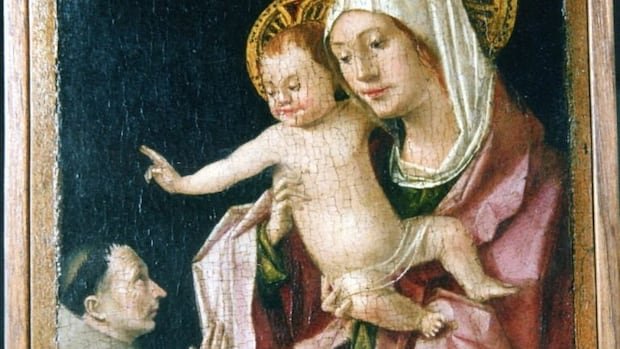

Four pieces of artwork by the 15th-century artist Antonello da Messina were stolen from the Museo Regionale di Messina, as confirmed by Italy’s culture minister on Sunday. Alessandro Giuli expressed shock and sadness upon learning of the theft. The stolen artworks include significant pieces by the Renaissance painter that were the only surviving works in his native city. The theft occurred on Saturday night, coinciding with a national holiday in Italy.
Museum director Marisa Mercurio described the incident as devastating, noting that the theft occurred just before 10 p.m. The stolen pieces were considered among Antonello da Messina’s most important and well-known works, representing a significant loss for the museum, the city, the community, and the art world.
Local councillor Enzo Caruso speculated that the recent purchase of a Messina artwork by the Italian state for $15 million may have attracted the attention of the thieves. Three out of the remaining five panels from an altarpiece known as “Polittico di San Gregorio” were stolen. Originally consisting of six panels intended for a local monastery destroyed in an earthquake, the altarpiece was the only piece by the Sicilian painter that had never left his hometown. Another artwork stolen was a small two-sided painting depicting the Virgin with Child and a Franciscan monk on one side and Christ on the other.
The stolen artwork was part of the Wilhelm Soldan collection and was acquired by the Sicilian Region in 2003. In a separate incident earlier this year, Italy’s Culture Ministry purchased a two-sided painting called “Ecce Homo” from Sotheby’s. Art-crime analyst Lynda Albertson highlighted the challenge of selling such recognizable works through legitimate channels. She emphasized that stealing an Antonello da Messina painting might be easier than selling it, cautioning that the thieves could face difficulties in profiting from their crime.
Antonello da Messina, born around 1430, trained in Naples and was influenced by Provençal and Flemish artists. He worked in Messina from 1457 to 1474. The theft occurred shortly after Italian police recovered three paintings by French masters that were stolen from a museum near the northern city of Parma in March.